


Cute Scoop DIY: ASMR Packing
4.699.00 Reviews
App Specs
- Version
- 1.0.02.01.06
- Updated On
- License
- Free
- Downloads
- 1,000,000+
- Developer
- BLACKGEMS GLOBAL JOINT STOCK COMPANY
- Categories
- Simulation
- Platform
- Android
Screenshots





 Analysis by AppCompare
Cute Scoop DIY: ASMR Packing is a small-scale simulation built around the appeal of preparing cute-looking packages. I find that kind of task satisfying when I want something gentle to focus on rather than a game that asks me to compete, manage a complex story, or react quickly. Its shop-owner premise gives the packing activity a simple frame: you are running a DIY packing store, and the pleasure comes from settling into the work.
That uncomplicated idea is also the game’s main trade-off. It suits short, relaxed sessions and players drawn to tactile, visual routines, but it is not the choice I would make when I want deep business management or a complicated progression system. The useful question is whether the packing loop itself is enough to hold your attention. If it is, this simulation has a clear, calming appeal.
What the packing routine is best at
I find the packing routine works best when I treat it as a small, self-contained break rather than a game to rush through. The useful test is whether the repeated task still feels pleasant after the novelty wears off; that helps me decide how often to return without expecting the game to become a deeper management challenge. From there, a few practical choices can make each session fit the moment.
A simple baseline to settle into
I’d approach a session with one expectation: this is about enjoying a focused packing activity, not turning a shop into a detailed business puzzle. The store-owner setup gives the tasks a bit of context, while the DIY angle makes the work feel personal rather than purely administrative. That distinction matters if you are choosing between a cozy simulation and a more involved management game.
The ASMR framing points toward a relaxed, sensory style of play. I would treat it as a companion for a quiet break—something to open when I have a few spare minutes and want a predictable activity. It is less suited to a commute where I need to keep switching attention, or to a session where I expect dramatic changes, demanding goals, or a long narrative to pull me forward.
A practical way to enjoy it is to let the activity set the pace rather than rushing through it. On a tired evening, for instance, I’d use a short session as a low-pressure reset between chores or before bed. The appeal is not that packing solves a real-world problem; it is that the small, contained task gives your attention somewhere pleasant to land.
Checking what matters before settling in
Before downloading, I’d check the device requirements and make sure the game is appropriate for the person who will use it. It is rated Everyone and requires Android 7.1 or later. Those details make it a broadly accessible option for family devices, though a parent should still decide whether the style and in-app purchase options suit a child.
Worth Reading Before You Choose

Switching to Android Auto Means Rethinking Your Driving Routine

Google Calendar Makes a Crowded Week Easier to Manage

Baby Panda World Brings Quick Play to Modern Phones, but Its Game Library Feels Busy

ESPN’s Live Game View Makes Following Close Games Easier

QuizzLand Review: A Good Fit for Short Trivia Breaks, Not Every Player

Basketball Stars: Multiplayer Is Fast, but Can It Recover When Matches Go Wrong?
The game is free to install, with optional in-app purchases priced from $1.99 to $5.99 per item. I’d keep that in mind before handing a device to a younger player, especially if purchases are not something you want to manage during a casual game session. The sensible habit is to review purchase controls on the device first, rather than relying on the game itself to be a spending-free experience.
It is developed by BLACKGEMS GLOBAL JOINT STOCK COMPANY. The current version is 1.0.02.01.06, and the game was released on August 14, 2026. I wouldn’t choose it based on those details alone; the more relevant decision is whether its particular focus on DIY packing sounds appealing. If you want a broad collection of unrelated mini-games, this has a narrower premise.
Repeatable habits that make casual play smoother
For a game centered on a repeatable task, a little consistency can make sessions feel better. I’d start by playing without trying to optimize everything at once: learn the basic rhythm, notice which parts feel satisfying, and then decide whether I want a longer session. This avoids turning a soothing activity into a checklist before I know whether I enjoy it.
A useful habit is to stop at a natural point rather than stretching a session just because there may be more to do. That keeps the experience refreshing and makes it easier to return later. If I were sharing the device with someone else, I’d also agree on whose turn it is before opening the game; simple, focused games can be easy to pass around, but shared progress is more enjoyable when expectations are clear.
Another small but useful trade-off is sound. Since the game leans on an ASMR identity, I’d try it with sound on in a quiet setting before deciding whether it works for me. If I’m in a public place or listening to something else, muted play may be more practical, but it could reduce the sensory part that makes the concept distinctive. I would not assume either mode is automatically best; it depends on whether the sounds or the visual routine are doing more for you.
For an everyday scenario, imagine having a short break after finishing a task at home. Rather than launching a competitive game that might demand a longer commitment, you can spend a little time with a contained packing activity, then put the phone away. That is the kind of use case where I can see this being more satisfying than a sprawling simulation with many systems to track.
Where it sits beside other simulation games
Compared with typical shop-management games, this title sounds deliberately focused. Those alternatives often appeal through stock decisions, staff, customers, or financial planning; a DIY packing game offers a different draw, centered on the act of preparing packages. If you like making and arranging things more than balancing a virtual business, that narrower focus may be a strength.
On the other hand, players who want a simulation to keep unfolding through increasingly complex decisions may find the premise limiting. I would choose a deeper management game if I wanted strategic trade-offs or a strong sense of running an expanding operation. I would choose a crafting game if I wanted more freedom to design objects from scratch. Cute Scoop DIY: ASMR Packing makes most sense when the packing routine—not a large simulation toolkit—is what sounds relaxing.
The game has an average rating of 4.6 from around 15,000 ratings, with 99 written reviews, and it has been installed over one million times. That suggests it has attracted a sizeable audience, but popularity is not a substitute for matching tastes. A person who dislikes repetitive, task-focused play can still bounce off it, even if other players enjoy the soothing format.
Limits to keep in mind as you play
The most important limitation is the narrowness that gives the game its identity. A focused loop can be calming, but it can also become repetitive if you need frequent new challenges to stay engaged. I would avoid expecting the kind of layered strategy found in a full business simulator, or the open-ended creative tools found in a dedicated design app.
There is also a difference between a relaxing game and a game that is always relaxing for everyone. ASMR-style presentation can be pleasant for one player and distracting for another, and a repetitive activity may feel comforting on one day and dull the next. My advice is to judge it in a short first session rather than committing to the idea that a gentle theme guarantees a perfect fit.
Because it offers in-app purchases, it is worth treating “free” as the cost to start, not a promise that every optional item is included at no charge. I’d enjoy the core experience first and only consider spending if I clearly understand what an item adds and genuinely want it. That approach is especially helpful for casual games, where a quick purchase can be less deliberate than it would be in a game you play every day.
Who I’d recommend it to
I’d recommend it to players who enjoy cozy simulations, small creative tasks, and a calm pace. It is also a reasonable pick for someone looking for a lightweight game to dip into between other activities, provided the focused packing premise is appealing. The Everyone rating makes its age classification broad, while the purchase options are a good reason for adults to check device settings when children will play.
I would suggest skipping it if you want a demanding management challenge, a varied set of game modes, or progression that constantly changes the way you play. It may also be a poor fit if ASMR-style presentation is not your thing or if repeated hands-on tasks quickly lose their charm. In those cases, a broader simulation or a more open-ended creative game is likely to offer better value for your time.
A grounded verdict for mastering the routine
My verdict is that Cute Scoop DIY: ASMR Packing is best understood as a focused comfort game, not a deep shop simulator. Its strength is the clear identity: a DIY packing-store setting paired with a gentle, sensory style. The smartest way to approach it is to keep sessions casual, check purchase controls in advance, and decide early whether the repeated activity feels calming or monotonous to you.
If you want a quiet task to return to during brief breaks, I can see this being an easy game to keep on your device. If you expect extensive strategy or constant novelty, I’d look elsewhere rather than asking this small premise to deliver something it is not built around. For the right player, the routine is the point—and that makes it a pleasant niche in the simulation genre.
Making the first session a fair test
I would use the first visit as a quick compatibility check rather than trying to judge the whole game from its theme. Play long enough to notice whether handling the packing tasks feels pleasant, then pause and ask a simple question: would I willingly return to this exact kind of activity tomorrow? That answer is more useful than deciding whether the store premise sounds charming in theory.
This approach also helps separate a mismatch in mood from a mismatch in taste. If I open it while distracted, in a noisy room, or when I’m craving a challenge, the gentle routine may seem flat. Trying again at a quieter moment gives the sensory presentation a fairer chance without requiring a long commitment. If it still feels repetitive after that, I would trust that reaction rather than forcing myself to find depth that is not the point.
Small routines for shared devices and breaks
For a family tablet or a phone passed between siblings, I’d set a simple turn-taking rule and keep purchase controls in place before anyone starts. The game’s straightforward premise may make it approachable for different ages, but the optional purchases mean “easy to hand over” should not be confused with “nothing to supervise.” A short, agreed session is a practical way to let someone try the packing activity while keeping the device owner in control.
It can also fit a specific kind of break better than a game with a long chain of objectives. If I have a few minutes while waiting for food or taking a pause from housework, I can choose a small task-focused game without needing to remember a plot or plan a strategy. I would avoid opening it when I’m meant to be watching for a stop or listening closely to someone, though: a calming activity can still hold attention, and the ASMR sound may be unwelcome in shared spaces.
What a repeatable play style can—and cannot—do
Experienced players often make a simple loop more enjoyable by keeping their own routine: settle somewhere comfortable, decide whether sound suits the setting, and stop once the activity no longer feels absorbing. Those are habits, not secret shortcuts or special mechanics. They help me get a more consistent feel from a focused game, but they cannot create variety if I need fresh goals or more involved choices to stay interested.
I would also resist treating every session as something to optimize. With a packing-focused game, speed may not be the rewarding part; taking a moment to enjoy the presentation can be the reason to open it at all. If I catch myself tapping through only to reach an imagined milestone, that is a sign to reassess whether this style of play is serving the break I wanted. A different, more goal-driven simulation may be a better match at that point.
Who gets the most from this particular niche
The strongest audience is not simply “people who like simulation games.” I think it is players who enjoy a narrow, hands-on theme and want a gentle task they can leave behind without keeping track of a complicated operation. Someone who likes arranging, preparing, or packaging things may find the premise more immediately appealing than a typical shop simulator focused on running a business. That is a specific preference, and it is worth being honest about it before installing.
On the other hand, people looking for creative freedom may be happier in a design or crafting app, where making something from scratch is the main event. Those wanting clear strategic pressure should choose a management game with more decisions to weigh. This one sits between those expectations only if the act of packing is itself satisfying; it is not a substitute for either kind of deeper experience.
A final check before deciding
With an average rating of 4.6 and more than one million installs, the game has clearly found an audience, but I would use those figures only as context. The more practical checks are whether the Android requirement fits your device, whether the optional purchase range is acceptable for your household, and whether you want a sensory, repeatable activity rather than a broader simulation. The Android version requires 7.1 or later, so that is worth checking before setting aside time to try it.
For me, the best recommendation is conditional: give it a short, quiet trial if cute package preparation sounds relaxing, and keep expectations centered on that focused loop. If you want to make the most of it, build a comfortable routine around sound, attention, and a natural stopping point instead of searching for hidden systems. If the packing itself does not hold your interest, a more open-ended creative game or a deeper management simulation will be a better use of your time.
Pros
- Relaxing ASMR sounds make packing sessions soothing and satisfying.
- Simple touch controls are easy to pick up and play.
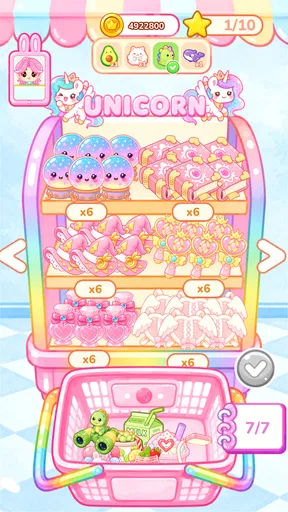
- Cute scoop designs and colorful items give each order visual charm.
- Short packing tasks work well for quick play sessions.
- No complex rules or strategy are needed to enjoy the game.
Cons
- Gameplay can become repetitive after many similar packing orders.
- Frequent ads may interrupt the relaxing flow.
- Some designs or items may require extra play or in-app purchases.
- ASMR effects may not appeal to players who prefer faster action.
- The simple tasks may offer limited challenge for experienced players.
FAQs for Cute Scoop DIY: ASMR Packing
What is Cute Scoop DIY: ASMR Packing?
Cute Scoop DIY: ASMR Packing is a casual, hands-on game centered on assembling colorful scoop-themed packages. Players follow simple steps to choose items, arrange them, and pack the finished order, with the process designed to feel relaxing and satisfying. Its cute visuals and ASMR-inspired presentation make it suited to short play sessions, though the exact activities and available content may vary between versions.
Is Cute Scoop DIY: ASMR Packing free to download and play?
The game may be available to download for free, but free access does not always mean every feature is included without cost. Depending on the version and platform, it may show advertisements or offer in-app purchases, such as optional items or other content. Check the game’s store listing before installing, and review purchase settings if children will be playing on the device.
Can I play Cute Scoop DIY: ASMR Packing offline?
Whether the game works without an internet connection can depend on the version and how its ads or other online features are configured. Some basic gameplay may be available offline after installation, while advertisements, updates, or optional online content may require a connection. If offline play matters to you, try launching the game in airplane mode and check its store listing for any stated network requirements.
Is Cute Scoop DIY: ASMR Packing suitable for children?
The game’s cute presentation and straightforward packing activities may appeal to younger players, and it does not appear to be focused on complex controls or competitive play. However, suitability also depends on the advertisements, in-app purchases, and content included in the version available in your region. Parents should review the app’s age rating and privacy information, and use device-level purchase controls where appropriate.
What should I check before downloading Cute Scoop DIY: ASMR Packing?
Before downloading, confirm that the store listing is for the correct game and is compatible with your Android or iOS device. Check the latest rating, update date, developer details, required permissions, privacy disclosures, and any mention of ads or in-app purchases. These details can change over time or differ by region, so the current listing is the best place to verify what you will get.


